AI Can Draft a Theatre Translation. Who Is Accountable for the Line on Stage?
AI can produce a fluent theatre translation in seconds. That changes the cost and pace of preparing a first draft. It does not settle what the audience should read.
The central question is no longer whether a model can translate a script. Modern systems can work with substantial context, follow instructions, and often suggest useful alternatives. The better question is:
Who is accountable for the line once it becomes part of a live performance?
A model cannot attend rehearsal, hear an actor change the weight of a phrase, negotiate a playwright’s intention, or answer to an audience when a confident translation is wrong. Those are not minor gaps to be patched after generation. They define why theatre translation must remain human-led.
Fluency Is Not the Same as a Dramatic Decision
On stage, a simple line such as “I’m fine” may reassure, deflect, threaten, or conceal grief. Its meaning comes from the scene, the relationship, what happened earlier, and what the actor does with the silence after it.
An AI system may produce a convincing equivalent. It may also make the line more explicit than the play intends, resolve an ambiguity, normalize a dialect, or choose a tone that belongs to a different character.
The problem is not that AI can only translate words. It can model patterns across a large amount of text. The problem is that several plausible translations may exist, and probability alone cannot authorize one of them for this production.
Human review asks questions that fluency can hide:
- Does the line preserve the character’s social position and relationship?
- Is the ambiguity intentional?
- Does a repeated word connect to an earlier scene?
- Has a dialect or community-specific expression been flattened into a standard register?
- Is a joke being translated, adapted, explained, or allowed to remain culturally specific?
- Has the playwright, translator, or director agreed on who may make that choice?
A polished sentence can still be the wrong dramatic decision.
An Example: Correct Meaning, Different Weight
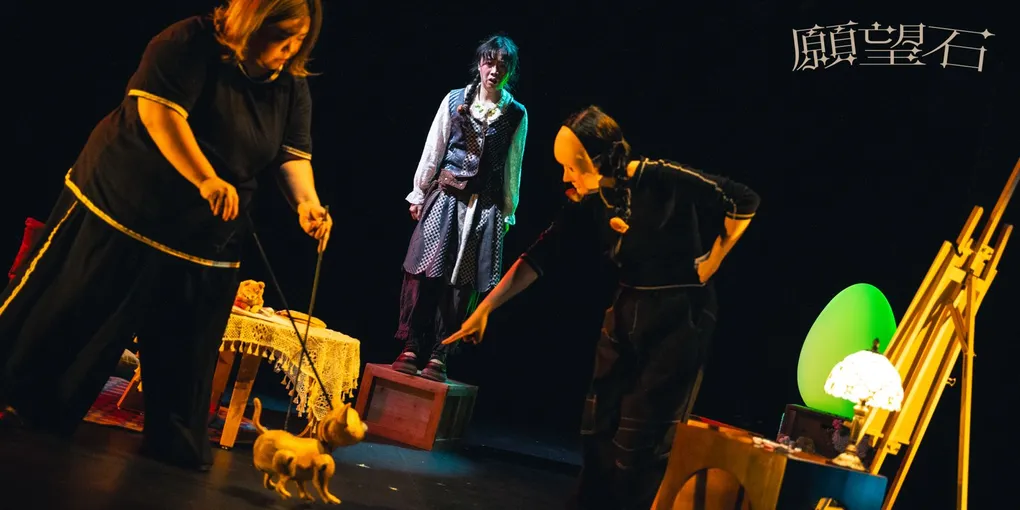
In the Hong Kong children’s play The Wishing Stone by KK Lam, produced by Lamps Theatre, a mother says:
「一個人做錯既野,無一種魔法可以幫倒你。」
One possible English draft is:
“There is no magic that can fix the mistakes you have made.”
Another is:
“No magic can undo what you’ve done.”
Neither version can be judged from the source sentence alone. The first is explanatory and explicit. The second is shorter and more final. The choice depends on the mother’s voice, the child audience, the moral thread of the play, the actor’s breath, and how the idea returns later.
An AI model can offer both. A theatre practitioner must decide which one belongs in the production—or whether a third version is needed.
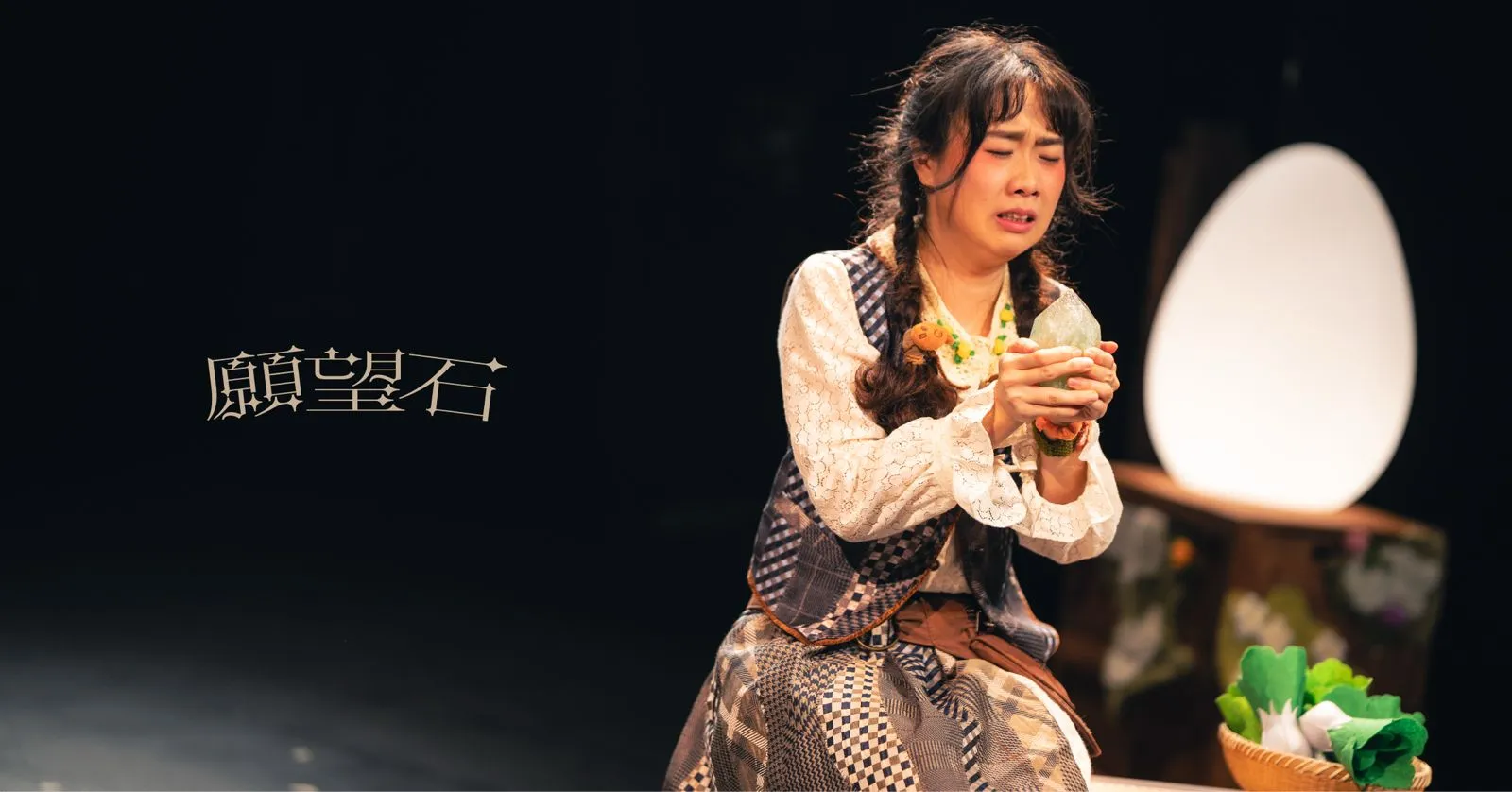 The final wording has to answer to the performance, not only to the source sentence.
Surtitles Have Physical Limits
A script translation can be read at leisure. A surtitle must be read while an audience also watches bodies, light, scenery, and action.
That creates physical constraints:
- the text must remain on screen long enough for the intended audience to read;
- line breaks must support meaning rather than interrupt it;
- dense wording can pull attention away from the stage;
- an early cue can reveal a joke or decision before the actor does;
- a late cue can make the audience chase a scene that has already moved on;
- projected and mobile displays create different line lengths, sightlines, and reading conditions.
There is no universal reading-rate number that makes every production accessible. Teams may measure words or characters per second, but the appropriate rate varies with language, audience, text complexity, display position, and the purpose of the service. Children, second-language readers, and accessibility-caption users may need different editorial choices.
AI can help shorten or segment a draft. Those suggestions still need to be tested from the audience position and revised in rehearsal.
Context Can Be Supplied; Responsibility Cannot
It is no longer accurate to say that all AI translation works one sentence at a time. A modern workflow can provide neighbouring lines, character names, glossaries, style instructions, and substantial sections of a script.
More context can improve a draft. It does not guarantee consistency or truth. A model may:
- invent a confident interpretation where the source is uncertain;
- apply a glossary correctly in one scene and drift in another;
- smooth away a meaningful change in how a character speaks;
- mishandle names, pronouns, wordplay, or culturally specific references;
- reproduce bias present in its training data or in the prompt;
- omit, merge, or over-explain content without making the editorial consequence obvious.
The person reviewing the output needs access to the source, the production context, and the authority to reject the draft. “A human was somewhere in the loop” is not enough if that person has no paid time, no relevant language knowledge, or no ability to change what reaches the stage.
Human-Led Means More Than Proofreading
A responsible AI-assisted workflow assigns real ownership.
Before generation
- Confirm that the company has the right to translate and process the script.
- Decide which material may be sent through the approved translation workflow.
- Identify the intended audience, target language, register, names, and terms that must remain consistent.
- Agree who has editorial authority: playwright, translator, dramaturg, director, access consultant, or another named role.
During review
- Compare every line with the source; do not review fluency in isolation.
- Check character voice, omissions, additions, ambiguity, cultural references, and terminology.
- Edit for the chosen display and reading conditions.
- Separate translated surtitles from same-language accessibility captions, which may also need speaker identification and meaningful sound information.
- Record unresolved choices instead of letting a plausible draft silently become final.
In rehearsal
- Cue the text against actual performance timing.
- Watch from representative audience positions and devices.
- Revise when acting, pacing, design, or audience needs change.
- Give the operator a stable, approved version and a clear way to handle late corrections.
Human-led does not mean rejecting automation. It means that automation does not acquire authority merely by producing fluent text.
Consent, Labour, and Credit Are Part of Quality
The conversation about AI translation often concentrates on output quality. Theatre also needs to ask who supplied the work, who was consulted, and who is paid to carry responsibility.
If a translator is asked only to “clean up” a machine draft, the task can still require full translation judgment while being budgeted as light proofreading. If a community’s dialect is involved, a generic fluent version may be less reliable precisely where cultural knowledge matters most. If an accessibility service is being promised, the people who need it should not first encounter it at opening night.
A credible workflow budgets time for review, rehearsal, and correction. It names the people whose decisions shaped the text. It does not use the presence of AI to make skilled language labour invisible.
Where SurtitleLive Fits
SurtitleLive supports an editor-time, AI-assisted translation workflow. Teams can generate drafts, work with saved character-name terminology and surrounding context, edit lines, and prepare text for live cueing. It is not live speech translation during the performance, and the platform does not guarantee that AI output preserves poetic voice, rhyme, period style, or dramaturgical intent.
The useful promise is narrower: reduce repetitive preparation work while keeping the editable text, review decisions, and live operation in human hands.
That boundary matters. A translation model is a drafting tool inside the production process. It is not the translator of record, the dramaturg, the access consultant, or the person at the controls.
The Final Authority Is a Production Decision
AI has changed how quickly a first draft can exist. It has not removed the need to decide what a line means here, for this actor, in this scene, for this audience.
The most responsible future is neither “AI replaces the translator” nor “theatre refuses the tool.” It is a workflow in which:
- technology offers speed, alternatives, and structure;
- skilled people retain authority, time, and credit;
- the audience service is tested under real performance conditions;
- no line reaches the stage simply because it sounded fluent.
AI can draft the words. The production must remain accountable for what they do.
Key Takeaways
- Modern AI can use substantial script context and produce useful theatre translation drafts, but fluency does not authorize a dramatic choice.
- Human-led review requires source comparison, named editorial authority, paid language expertise, and the power to reject or revise model output.
- Surtitles must be edited and rehearsed for actual reading conditions; no universal reading-rate number suits every language, audience, or display.
- SurtitleLive supports editor-time AI-assisted drafting and live cue preparation, not live speech translation or a guarantee that AI preserves voice, rhyme, style, or intent.
FAQ
Why must AI theatre translation remain human-led?
Several fluent translations may be dramatically plausible. People with source-language and production context must decide which wording belongs to the character, scene, audience, and authorized interpretation—and remain accountable for that choice.
Is human review just proofreading an AI draft?
No. It includes checking rights and consent, comparing every line with the source, resolving voice and cultural choices, editing for the display, distinguishing translation from accessibility captions, rehearsing cues, and approving late changes.
What makes a translation suitable for surtitles?
It must be readable while the audience also watches the stage. Timing, density, line breaks, cue placement, language, audience needs, and projected or mobile display conditions all affect the editorial decision.
What does SurtitleLive's AI-assisted translation do?
It helps teams generate and edit translation drafts with surrounding context and saved character-name terminology, then prepare approved text for live cueing. It is an editor-time aid, not automatic final authority or live speech translation.
Glossary
- Human-led: A workflow in which named people retain editorial authority, relevant expertise, paid review time, and accountability for the final text.
- Dramatic decision: A choice about wording that affects character, rhythm, ambiguity, cultural meaning, or the production's interpretation.
- AI-assisted draft: Model-generated text treated as editable source material rather than approved performance copy.
- Reading conditions: The language, audience, text density, timing, sightline, and display factors that shape whether live text can be read comfortably.
- Editorial authority: The agreed responsibility and permission to approve, reject, or revise what reaches the audience.